Real estate companies generate leads from multiple channels, including websites, Google, social media, property portals, paid advertising, WhatsApp, referrals, and property enquiries.
But generating a lead is only the beginning.
The bigger challenge is turning those enquiries into meaningful conversations, property viewings, negotiations, and eventually closed deals.
This is where an AI CRM for real estate can make a significant difference.
Instead of simply storing customer information, an AI-powered CRM can help real estate businesses capture leads, understand buyer intent, prioritize prospects, automate follow-ups, and give sales teams the information they need to act at the right time.
When combined with effective digital marketing, AI CRM automation can create a connected journey from lead generation to lead conversion.
What Is an AI CRM for Real Estate?
An AI CRM for real estate is a customer relationship management platform enhanced with artificial intelligence, automation, analytics, and intelligent lead management capabilities.
A traditional CRM generally helps sales teams store information such as:
- Customer names
- Phone numbers
- Email addresses
- Property interests
- Follow-up notes
- Sales stages
An AI-powered CRM can go further by analysing customer behaviour and helping sales teams determine what action should happen next.
For example, an AI CRM can help identify when a prospect:
- Repeatedly views a particular property
- Responds to a WhatsApp message
- Downloads a property brochure
- Requests a site visit
- Returns to the website several times
- Shows interest in a specific price range
This information can then be used to prioritize leads and automate relevant actions.
Why Real Estate Companies Struggle With Lead Conversion
Real estate businesses often receive leads from multiple sources at the same time.
A single company may receive enquiries from:
- Google Ads
- Meta Ads
- Property portals
- Website forms
- Social media
- Phone calls
- Walk-ins
- Referrals
The problem begins when these leads are managed separately.
Sales teams may use spreadsheets, WhatsApp conversations, emails, phone records, and different platforms to track prospects. As lead volume increases, it becomes easier to miss follow-ups or forget which prospects are most likely to convert.
An effective real estate lead management system brings these activities together and gives sales teams one central view of their prospects.
How AI CRM Helps Real Estate Companies Generate and Convert More Leads
1. AI Helps Capture Leads From Multiple Sources
The first step toward better conversion is making sure leads are captured correctly.
An AI CRM can connect with websites, advertising platforms, communication channels, and other lead sources so that enquiries can automatically enter the CRM.
Instead of manually copying information from different platforms, the system can centralize details such as:
- Lead source
- Contact information
- Property interest
- Budget
- Location preference
- Previous interactions
- Lead status
This creates a single source of truth for the sales team.
The result is fewer scattered leads and less manual data entry.
2. AI Lead Scoring Helps Sales Teams Prioritize Prospects
Not every real estate lead has the same level of buying intent.
One person may simply be browsing properties, while another may be ready to schedule a viewing.
AI can help identify these differences through AI lead generation and lead scoring.
For example, the system can analyse signals such as:
- Website activity
- Property views
- Response history
- Budget information
- Number of enquiries
- Requested property type
- Site-visit interest
- Communication engagement
Leads can then be categorized according to their potential intent.
A sales representative can focus first on high-intent prospects instead of spending the same amount of time on every enquiry.
This can make the sales process more efficient while helping teams focus their efforts where they are most likely to produce results.
3. Automated Follow-Ups Reduce Lead Leakage
One of the biggest problems in real estate sales is not generating leads—it is failing to follow up consistently.
A prospect may enquire today but receive a response several hours later. Another may visit a property but never receive a follow-up call.
With CRM automation, follow-up actions can be triggered automatically.
For example:
New enquiry → Instant response → Lead qualification → Follow-up reminder → Property recommendation → Site visit → Post-visit follow-up
The exact workflow can be customized according to the company's sales process.
Automation does not replace the salesperson. Instead, it reduces repetitive administrative work and helps ensure that important follow-ups are not forgotten.
4. AI Can Personalize Lead Communication
Real estate buyers expect relevant communication.
Sending the same message to every prospect can make the sales experience feel generic.
AI can help personalize communication based on information already available in the CRM.
For example, a buyer looking for a 3-bedroom property in Dubai within a specific budget could receive property recommendations that match those requirements instead of a generic property list.
Similarly, someone who has already attended a site visit may need a different message from someone who has only submitted an initial enquiry.
Personalized communication can make follow-ups more useful and relevant.
5. AI CRM Makes Real Estate Lead Management More Efficient
Effective real estate lead management is about knowing:
Who is the lead?
Where did the lead come from?
What property are they interested in?
What have they already discussed with the sales team?
What should happen next?
An AI CRM can bring these details together in one place.
Sales managers can also gain better visibility into:
- New leads
- Qualified leads
- Follow-ups due
- Site visits
- Negotiations
- Closed deals
- Lead sources
- Sales performance
This makes it easier to identify where leads are being lost in the sales funnel.
For a broader look at how AI-powered CRM technology can support real estate businesses, explore Samyotech's Real Estate AI CRM Software Guide.
6. AI Helps Improve Lead Response Time
In competitive real estate markets, speed matters.
When a prospect submits an enquiry, they may also be contacting other agents or agencies.
An AI CRM can help businesses respond quickly through automated acknowledgements, chatbots, notifications, and follow-up workflows.
For example:
Lead submitted → AI identifies enquiry → Automated response → Salesperson notification → Lead qualification → Follow-up
This creates a faster response process while keeping the sales team involved where human interaction is most valuable.
A faster response can also help businesses maintain engagement while the prospect is actively considering their options.
7. AI CRM Connects Marketing With Sales
Generating thousands of leads does not necessarily mean generating thousands of opportunities.
Real estate businesses need to understand which marketing activities are producing valuable prospects.
An AI CRM can connect lead information with marketing sources and help businesses analyse:
- Which campaigns generate enquiries
- Which channels generate qualified leads
- Which properties receive the most interest
- Which leads move to site visits
- Which sources contribute to conversions
This creates a stronger connection between lead generation and revenue.
For businesses investing in SEO, paid advertising, social media, and content marketing, this visibility can help improve marketing decisions over time.
Real estate companies looking to improve their online visibility can also explore Samyotech's AI SEO & Digital Marketing Services.
8. AI Helps Identify Where Leads Are Being Lost
A real estate sales funnel can contain several stages:
Enquiry → Qualification → Contact → Property Recommendation → Site Visit → Negotiation → Booking → Closure
Without proper tracking, it can be difficult to identify where prospects are dropping out.
AI-powered analytics can help businesses identify patterns.
For example, if a large number of prospects are reaching the site-visit stage but very few are progressing further, the company can investigate:
- Property suitability
- Pricing
- Sales follow-up
- Customer experience
- Communication gaps
- Competitor offers
This turns CRM data into actionable sales insights.
Instead of simply knowing how many leads were generated, businesses can start understanding why some leads convert while others do not.
9. AI CRM Can Improve the Customer Experience
Real estate transactions involve significant financial decisions, so buyers often need information at different stages of the journey.
An AI CRM can help sales teams maintain context throughout the customer journey.
Instead of asking a prospect the same questions repeatedly, the sales team can access previous interactions and understand their requirements.
This can create a more consistent experience across:
- Website
- Phone
- Social media
- Property visits
The objective is not simply to automate communication.
The objective is to make every interaction more relevant.
AI CRM + Digital Marketing: A Stronger Lead Generation Strategy
AI CRM works best when it is connected with a broader digital marketing strategy.
SEO and digital marketing can help real estate businesses generate visibility and attract potential buyers.
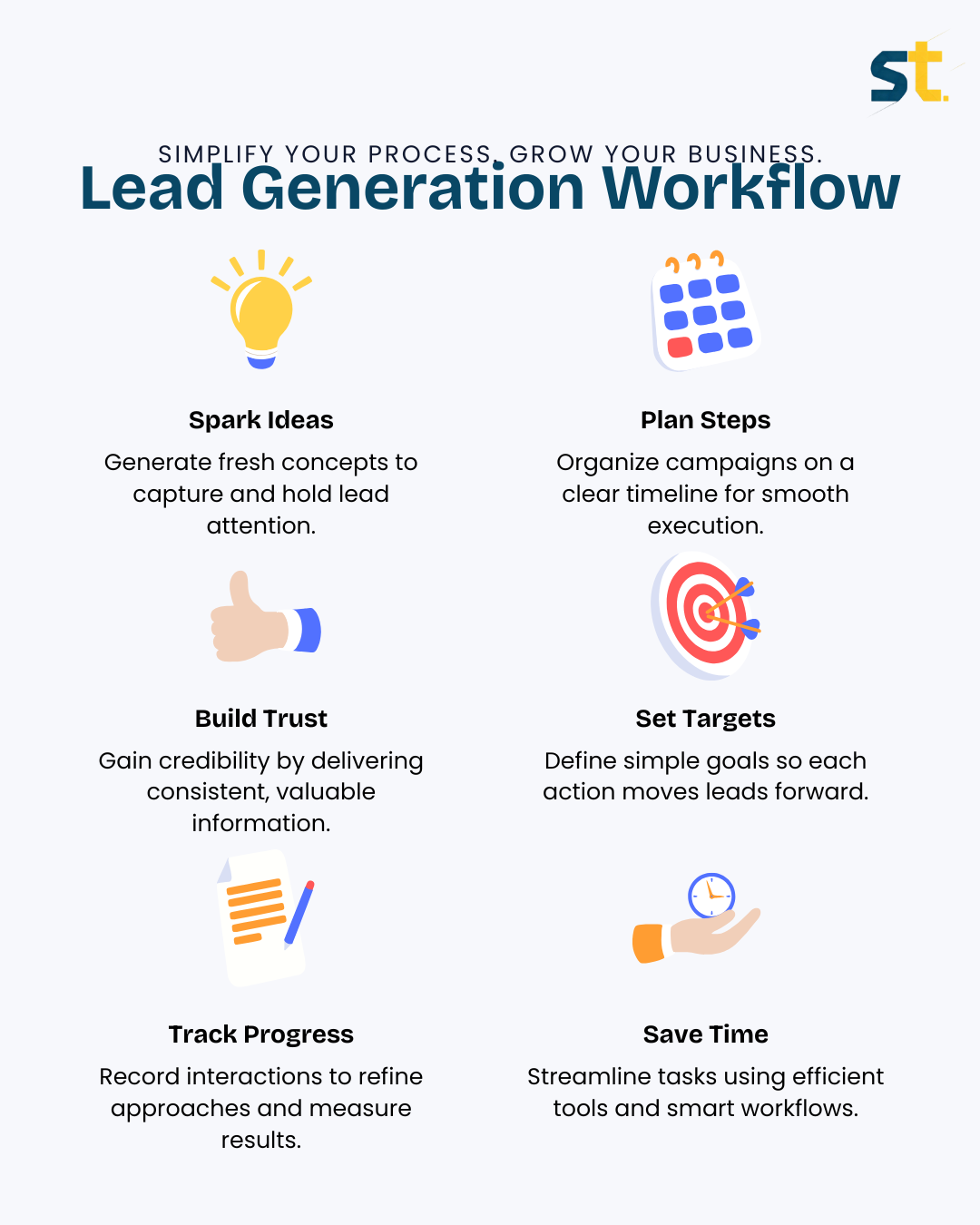
AI CRM can then help capture, qualify, nurture, and convert those prospects.
This creates a connected marketing funnel:
SEO & Content → Website Traffic → Lead Generation → AI CRM → Lead Qualification → Automated Nurturing → Sales Follow-Up → Conversion
For real estate companies, this combination can be especially useful because different buyers may enter the funnel through different channels.
Businesses targeting real estate audiences in India and Dubai can explore Samyotech's Real Estate AI SEO & Digital Marketing Services.
How to Choose the Right AI CRM for Your Real Estate Business
Before investing in an AI CRM, real estate companies should evaluate whether the platform fits their actual sales process.
Lead Capture
Can it collect leads from your website, advertising platforms, portals, and other channels?
Lead Scoring
Can it identify high-intent prospects using behavioural and engagement signals?
CRM Automation
Can it automate reminders, follow-ups, notifications, and repetitive workflows?
Communication Integration
Can it connect with email, WhatsApp, SMS, phone systems, or chatbots?
Property Management
Can sales teams connect leads with properties, projects, listings, and buyer requirements?
Analytics
Can managers understand lead sources, sales stages, conversion rates, and team performance?
Scalability
Can the CRM grow with your agency, brokerage, or property development business?
The right platform should support your existing workflow rather than forcing your sales team into an unnecessarily complicated process.
Benefits of AI CRM for Real Estate Companies
When implemented correctly, an AI-powered CRM can provide several practical benefits:
Better lead organization
All prospect information can be managed in a centralized system.
Faster responses
Automated workflows can help ensure new enquiries receive timely attention.
Improved lead prioritization
AI-based scoring can help sales teams focus on prospects with stronger buying signals.
Consistent follow-ups
Automated reminders and workflows can reduce missed opportunities.
More personalized communication
Customer information can be used to make conversations more relevant.
Better sales visibility
Managers can track leads across different stages of the sales funnel.
Improved marketing insights
Businesses can identify which channels and campaigns contribute to valuable leads.
Reduced manual work
Automation can take care of repetitive CRM and follow-up activities.
Final Thoughts
For real estate companies, generating leads is only one part of growth.
The bigger opportunity lies in responding faster, prioritizing the right prospects, maintaining consistent follow-ups, and understanding what drives conversions.
An AI CRM for real estate brings these activities together by combining lead management, automation, AI-powered insights, and sales workflows in one system.
When connected with SEO and digital marketing, it can create a more complete journey from discoverability to enquiry to conversion.
As competition increases, real estate companies that combine strong lead generation with intelligent CRM automation can build a more efficient and scalable sales process.
If your business is looking to improve its real estate lead management, CRM automation, or AI-powered sales workflow, contact Samyotech to discuss your requirements.
Frequently Asked Questions
What is an AI CRM for real estate?
An AI CRM for real estate is a customer relationship management platform that uses artificial intelligence and automation to capture, qualify, nurture, and manage property leads throughout the sales process.
How does AI CRM help generate real estate leads?
AI CRM primarily helps manage and optimize leads generated through channels such as websites, advertising, social media, property portals, and other marketing activities. It can also support AI-powered lead qualification and automated engagement.
Can AI CRM automate real estate follow-ups?
Yes. CRM automation can trigger reminders, messages, notifications, and other follow-up activities based on lead behaviour, sales stage, or predefined workflows.
What is the difference between a traditional CRM and an AI CRM?
A traditional CRM primarily focuses on storing and organizing customer and sales information. An AI CRM adds capabilities such as intelligent lead scoring, automated workflows, behavioural analysis, personalized communication, and AI-assisted decision-making.